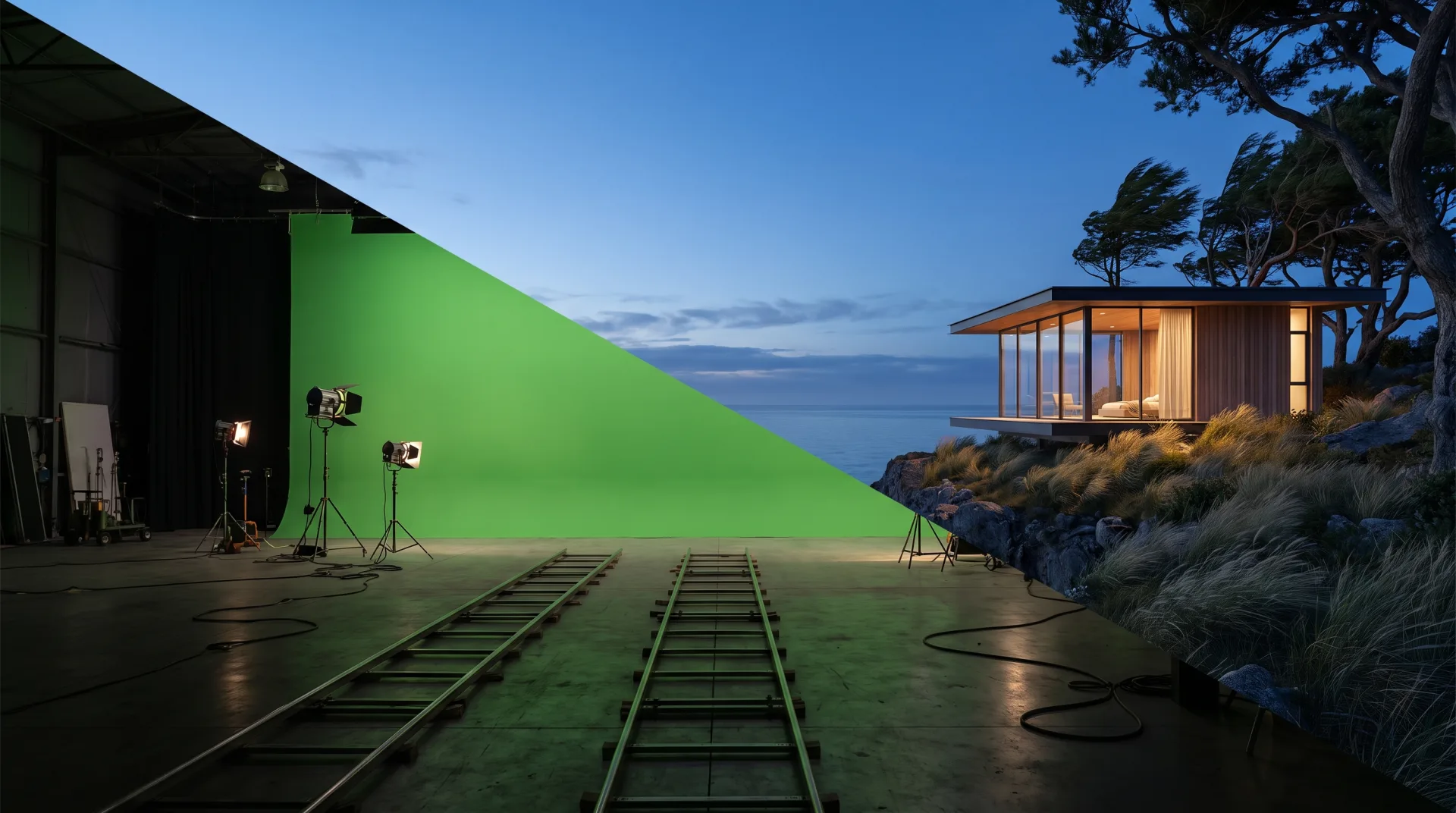
CGI is one of the core ideas in our 3D rendering knowledge base. This page defines it, follows one armchair through the five stages of making it, separates CGI from VFX and from AI, and shows what CGI of buildings and products looks like. We make architectural and product CGI for a living as a US 3D visualization company with architects and interior designers on the team, so the examples come from that work rather than from film.
What does CGI stand for?
CGI stands for computer-generated imagery: any image or sequence of images produced by computer software, usually from a 3D scene. That is the CGI meaning in film, games, advertising and architecture alike. The CGI full form, sometimes searched as the full form of CGI, is simply those three words, and the CGI acronym is read letter by letter, C-G-I. A working CGI definition from the Wikipedia article on computer-generated imagery calls it a specific application of computer graphics for creating or improving images in art, printed media, simulators, videos and video games. So when a brief says CGI stands for computer-generated imagery, it means a picture that was calculated, not photographed.
What CGI is not is a technique of its own. It is the umbrella over several crafts: 3D modeling, texturing, lighting, rendering and compositing. A furniture brand's catalog shot, a planning image of a tower and a dragon in a fantasy film are all CGI, made with much the same software.
How is CGI made?
CGI is made in five stages: modeling the object, texturing it, lighting the scene, rendering the frames and compositing the result. Most 3D CGI follows this order, because each stage needs the one before it; a CGI render is the output of stage four, and the finished image is the output of stage five.
- Model the object. An artist builds the object's shape as digital geometry at real dimensions. Every CGI image starts with one of the 3D modeling types, whether the source is a CAD file, a set of drawings or photos of a sample.
- Texture it. Each surface gets a material: the color, roughness and pattern of the fabric, timber or metal, described by image maps and physical values.
- Light the scene. The artist places a sun and sky, an HDRI photograph of a real sky, or studio lights, with real brightness and color.
- Render the frames. The render engine calculates how light travels through the scene to the camera and produces the pixels. This is the step explained in full on 3D rendering.
- Composite the result. The rendered layers are combined and finished: color grading, depth, a background photo or, in film, the live-action plate the CGI must sit inside.
In our studio the five stages for one product still take a few hours of artist time and a render of minutes to an hour. The render is the short part. Getting the stitching on a seat cushion right, or the light falling the way it would in a real showroom, is the long part.
How is CGI used in movies?
Films use CGI to create digital characters, environments, set extensions and effects that would be impossible, dangerous or too costly to film. According to Wikipedia, the first feature film to use CGI with live action in its story was Westworld in 1973, and Pixar's Toy Story became the first fully CGI feature film in 1995. Between those dates, Futureworld (1976) was the first major feature to use 3D CGI, a digitized hand. The same methods reached architecture once computers could render a photoreal building in hours rather than weeks; that path is traced in the history of CGI.
Film CGI and architectural CGI share their tools but not their goal. A film shot has to convince for a few seconds in motion. An architectural still has to survive a buyer studying it for minutes, and it has to be true to the drawings.
Is CGI still animation?
CGI is animation only when the images move; a CGI still is a single rendered frame and CGI animation is a sequence of frames played back. A 30-second film at 30 frames per second is 900 rendered frames, which is why animation takes weeks where a still takes days. For buildings, CGI animation becomes a 3D architectural animation or walkthrough, where a camera moves through a project that is not yet built.
Is Shrek CGI or animation?
Shrek (2001) is both: it is a fully computer-animated film, so every frame is CGI. The Wikipedia article on Shrek records that it became a computer-animated production after an earlier motion-capture approach was abandoned. Animation describes the moving result, CGI describes how each frame was made, and the two terms overlap rather than compete.
What is CGI vs VFX?
CGI is imagery generated by a computer, while VFX (visual effects) is the wider job of combining CGI with filmed footage; most VFX contain CGI, but not all CGI is VFX. The Wikipedia article on visual effects describes VFX as integrating live-action footage with other footage or CGI elements to create realistic imagery. The CG vs CGI question is simpler: CG (computer graphics) is the whole field, and CGI is the images that field produces, so in practice studios use the two words interchangeably. SFX, or special effects, are the physical tricks done on set, which the Wikipedia article on special effects lists as mechanized props, scale models, animatronics and pyrotechnics.
| Term | Meaning | What it includes | Example |
|---|---|---|---|
| CGI | Computer-generated imagery | Any image or frame made by software from a digital scene | A photoreal render of an unbuilt house |
| CG | Computer graphics | The whole field: modeling, rendering, simulation, and the images | A studio's "CG department" |
| VFX | Visual effects | Digital work that combines or alters footage, often using CGI | A digital city added behind actors filmed on a green screen |
| SFX | Special effects | Physical effects created on set during filming | A real explosion, rain machine or animatronic creature |
An architectural render is CGI but not VFX, because nothing is filmed. A photomontage that places a rendered building into a real site photograph is closer to VFX, because CGI is combined with a captured image.
Is CGI considered AI?
CGI is not AI: CGI artists build and light a scene with controlled geometry, while generative AI predicts pixels from training data, although studios now use the two together. In CGI, every object exists as a measured 3D model, so the sofa is 2.4 meters wide because someone typed 2.4 meters. In a generated image, the sofa is as wide as the model guessed. Our page on the difference between CGI and AI shows the same building made both ways and lists where each is reliable.
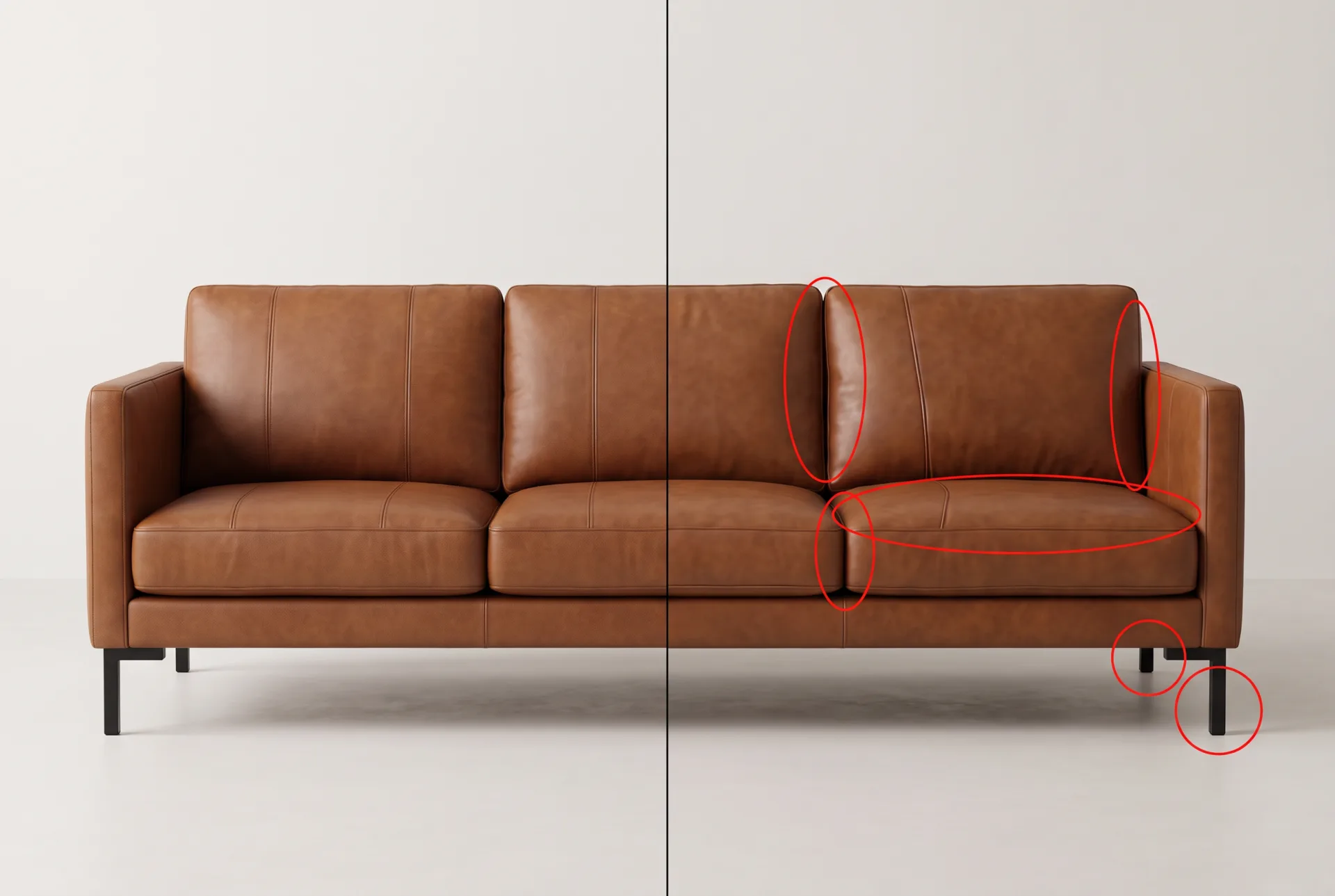
AI already sits inside CGI pipelines, for example in denoising, which cleans grain from a render so it finishes sooner. That is AI helping CGI, not replacing the model the image is calculated from.
What do CGI images of buildings and products look like?
CGI images of buildings and products look like photographs of things that have not been built or shot yet: exteriors, interiors, furniture and packshots. Good CGI pictures are hard to tell from photography, because they are lit and framed by the same rules a photographer follows. Our 3D visualization portfolio shows CGI work for architects, developers and brands.

In architecture, CGI is usually called architectural rendering, and rendering in architecture is used for planning applications, pre-sales brochures and design sign-off. In product marketing, CGI images replace studio photography for catalogs, marketplace listings and packaging, because a product can be shown in every color from one model, before the first unit is made.
What else can CGI mean?
CGI also names an IT services company and the Common Gateway Interface, a web server standard; neither is related to computer-generated imagery. The Common Gateway Interface is an interface specification that lets a web server run an external program to answer a request. On this page and across our site, CGI always means images.
How do you order CGI for a building or product?
The agency produces architectural and product CGI from drawings, CAD files or samples, with a first draft in 3 to 5 business days. You send the files (Revit, SketchUp, Rhino, 3ds Max, AutoCAD or Archicad models, neutral formats such as IFC, OBJ, FBX or STEP, or PDF drawings, sketches and photos) and we return a fixed quote within 12 hours.
| CGI type | What it does for you | First draft |
|---|---|---|
| Product image, white background | Catalog and marketplace images without a photo shoot, with every color variant from one model | 3 to 5 business days |
| Product lifestyle scene | Shows the product in a styled room without building a set | 3 to 5 business days |
| Interior view | Settles finishes and furniture before anything is ordered, and sells the room off-plan | 3 to 5 business days |
| Exterior view | Shows boards and buyers the building in its real street before it is built | 3 to 5 business days |
| Architectural animation | Walks a buyer or a board through the project in sequence | 2 to 3 weeks |
Two rounds of revisions are included on every image, with full commercial rights and 4K JPG and PNG files ready for print, web and listings. For brands, a product render replaces packshot photography with an image made from your CAD files or a sample. For buildings, our 3D architectural visualization turns drawings into exterior, interior and aerial views that let clients and boards judge the design before it is built. Every service and its rate is on our 3D rendering prices page.