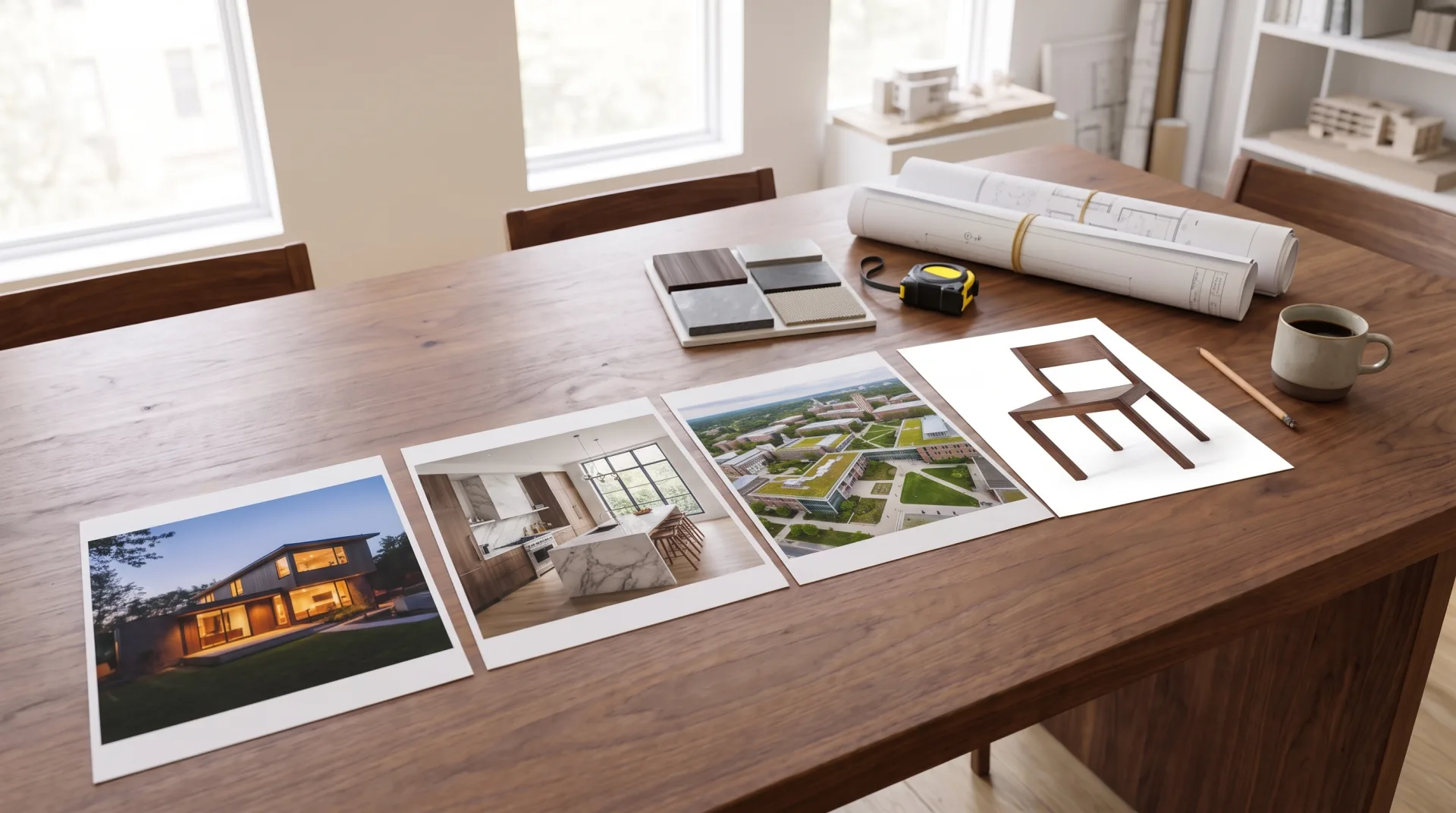
The guides are written for the people who order renderings: architects, developers, builders, interior designers and product brands. For prices rather than advice, see our page on 3D render cost.
How to choose a 3D rendering company
Five checks in order, and a ten-question checklist to send every studio on your shortlist.
The best architectural visualization companies
Established studios compared on portfolio, staff, published prices and written terms.
Which suits your project, by volume, budget and how much review time you have.
How architecture firms send work out and keep it on budget and on time.
How to write a 3D rendering brief
The eight items every brief needs, with a template.
Our six steps from brief to final files, with the time each takes.
Interior design mood boards
How to make a mood board and turn it into a rendering brief.
Ecommerce product photography vs rendering
When a photo shoot is cheaper and when a render is.
Amazon product image requirements
The rules for main and gallery images, and how renders meet them.
Multifamily marketing visuals
The renderings, floor plans and tours a lease-up needs, in order.
Choosing a 3D rendering studio
Choose a studio by portfolio fit, who reads your drawings, a written price, the revisions included and the turnaround, and compare agencies, freelancers and named studios on the same terms. The three guides below take those checks in turn.
How to choose a rendering studio
Check the portfolio in your project type, who reads your drawings, the price per view, the revisions included and the turnaround, then order one test view from your own files. Our guide on how to choose a 3D rendering company ends with a ten-question checklist and our own answers to it.
The best architectural visualization companies
The best studio for you is the one whose portfolio, staff and published terms fit your project. Our comparison of the best architectural visualization studios sets established firms side by side on those points, with our own studio among them.
Freelancer or agency
A freelancer is usually cheaper for one-off work you can check yourself; an agency adds capacity, a second pair of eyes on your drawings and a deadline it answers for. The guide to weighing 3D modeling freelance work against an agency sets out where each fits.
Briefing and outsourcing the work
A complete brief and a disciplined review process are what keep an outsourced project on budget. Most extra revision rounds come from missing information at the start or scattered comments in the middle, and both are avoidable.
Outsourcing 3D rendering
Architecture firms outsource well when they send complete files, a fixed camera list and one set of comments per round. Our guide to working with a 3D rendering outsourcing service provider covers contracts, file handover and review.
How to write a 3D rendering brief
A brief covers eight items, from the project's purpose and files to camera views, lighting, output and schedule. The guide on writing a 3D rendering brief includes a template with a field for each.
How a project runs with us
A project with us runs in six steps: brief, a fixed quote within 12 hours, payment, model and clay draft, a first draft in 3 to 5 business days for stills, then two revision rounds and the final files. Our page on the 3D rendering project process gives what you do and what we do at each step.
Interior design mood boards
A mood board is a one-page collage of a room's palette, materials and furniture, and it becomes a rendering brief once each item is specified. The guide to interior design mood boards shows how to make one and how to turn it into a brief.
Visuals for selling products and property
Product sellers and property marketers buy rendering to replace photo shoots and to sell before something is built. The guides below cover the decisions each kind of seller faces.
Ecommerce product photography vs rendering
Rendering usually costs more than a photo for one simple product, and less once you need many colorways, angles or a set you would have to build. The guide to ecommerce product photography vs rendering compares the routes a store can take.
Amazon product image requirements
Amazon sets strict rules for the main product image and the gallery, and a render can be made to meet them exactly. Our guide to Amazon product image requirements lists the rules and how renders meet each one.
Multifamily marketing visuals
A lease-up needs exterior and amenity renderings first, floor plans for every unit type next, and virtual tours once units are ready to show. The guide to multifamily marketing visuals sets out what to order at each stage of a lease-up.
How the guides fit together
Read the guides in the order a project runs. Decide what you need and who should make it with the choosing guides, then write the brief, and then use the selling guides to plan which images go where. The guides answer how to buy; our guides to how rendering works explain the rendering itself, from ray tracing to file formats.
Every guide states its sources where it uses outside figures, and where a guide mentions our own prices or terms, they match our price list. The guides are published by 3DRenderingAgency, one of the US 3D rendering studios, and our team includes architects and interior designers who render for the readers these guides are written for.